World War 1
Discharge Papers, Memorials and Reunions
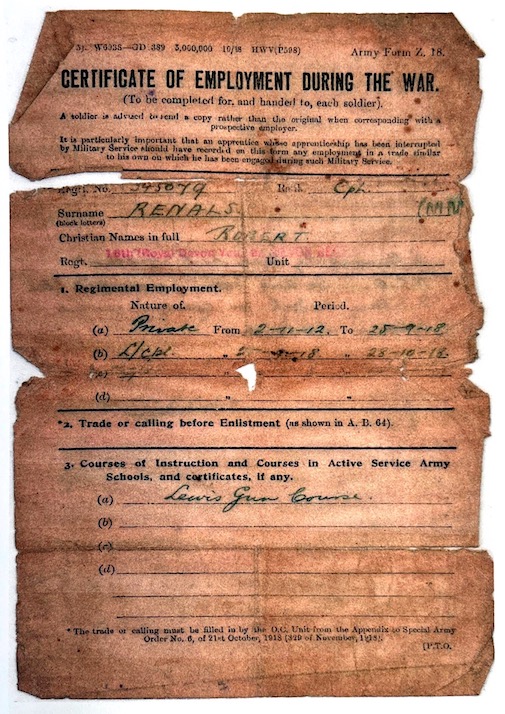
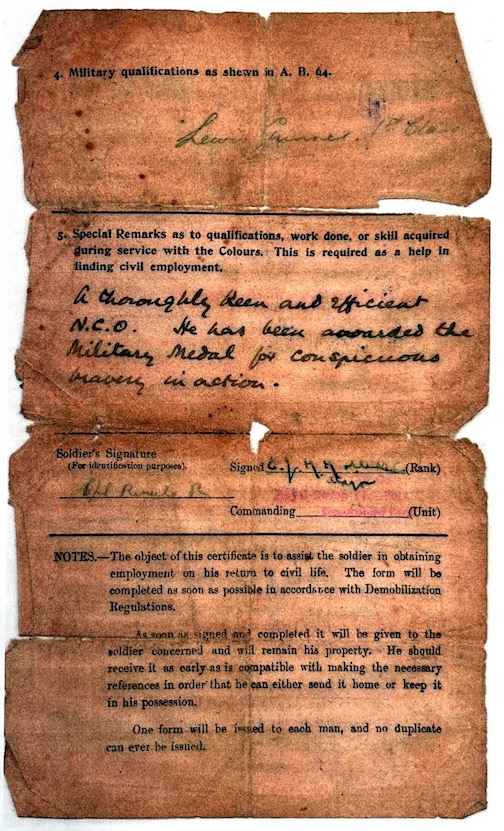
Bob's Discharge Papers — Only two documents exist which relate to Bob's demobilisation. The above gives a very brief outline of his army career. The reverse of this form is shown below.
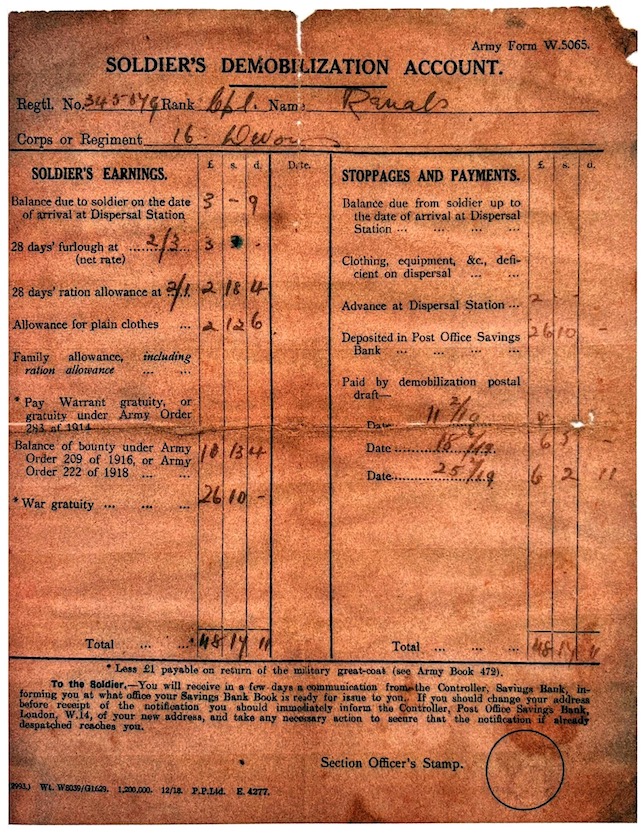
Bob's Demobilisation Account. It would appear that soldiers were allowed to keep their greatcoats on payment of £1 — scant reward for four years' service.
H.M.T. Olympic
Bob's regiment sailed to Gallipoli in HMT Olympic, a sister-ship of the Titanic. Below is a poster advertising a trip to New York in the happier days before the war.
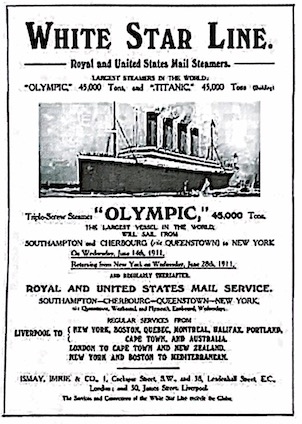
The Royal Mail Ship Olympic was the first Olympic-class ship to be built by the White Star Line. Work began on her in 1908 and ended in 1910. She left England on her maiden voyage in mid-1911 and reached New York a few days later. During World War 1 she served as a troop transporter. After the war she was returned to the White Star Line and served once again as a passenger liner until 1934, when the line merged with another company. In 1935 she was sold and scrapped. Many of her furnishings were sold and are now in private homes, museums and hotels. The entire lounge can be seen in the Olympic Room at the White Swan Hotel, Alnwick, Northumberland.
As well as the Titanic the Olympic had another sister-ship, the Britannic. She was launched in 1914 just as World War 1 was starting. She too was commandeered and made into a hospital ship. On November 21st, 1916 she was passing the island of Kea in the Aegean on the way to pick up wounded troops when, at 8.00 a.m., the crew felt the ship shudder. She had either struck a mine or was hit by a torpedo and sank within an hour. Of the 1,100 people on board 30 were lost. Most of the deaths were due to lifeboats being launched while the ship was moving and being dragged by the wake into the ship's giant propellers.
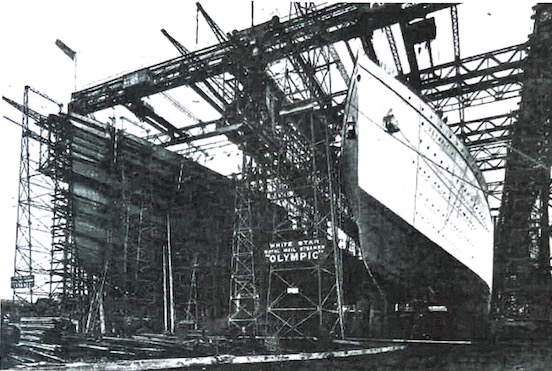
The Olympic and Titanic under construction. The Olympic, on the right, was completed and launched first.
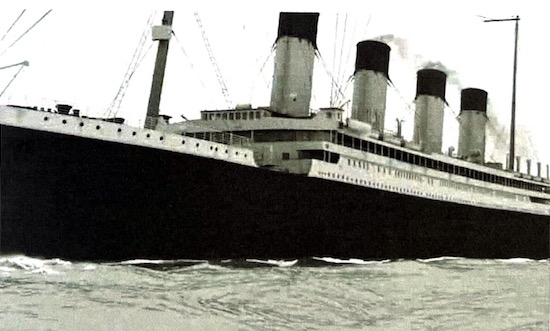
The Olympic in full sail.
Medals
Bob was awarded four medals during his service. The most significant of these was the Military Medal awarded for his gallant actions at El Foka during the Palestine Campaign. For this mission — which demanded considerable skill and bravery and which saved the lives of many of his comrades — he was recommended for the Distinguished Conduct Medal. Because the operation to secure and hold El Foka had failed his award was downgraded to the Military Medal.
The Military Medal was established by King George V on 25th March, 1916. It was initially awarded to NCOs and men of the army (including the Royal Flying Corps and Royal Navy Division) for individual or associated acts of bravery which were insufficient to merit an award of the Distinguished Conduct Medal (DCM). The medal was not restricted to British or Commonwealth subjects and among the foreign recipients was a Frenchman, René Fonck, and an American, Raoul Lufbery. The medal was subsequently awarded to women and two were awarded to two civilian women for their role in the Easter Rising in Dublin in 1916. The MM was equivalent to the Military Cross awarded to officers — an excellent example of class distinction.

The Military Medal. The obverse bore the head of King George V. The inscription around the edge reads "345079 PTE. R. RENALS R.1 DEVON YEO."
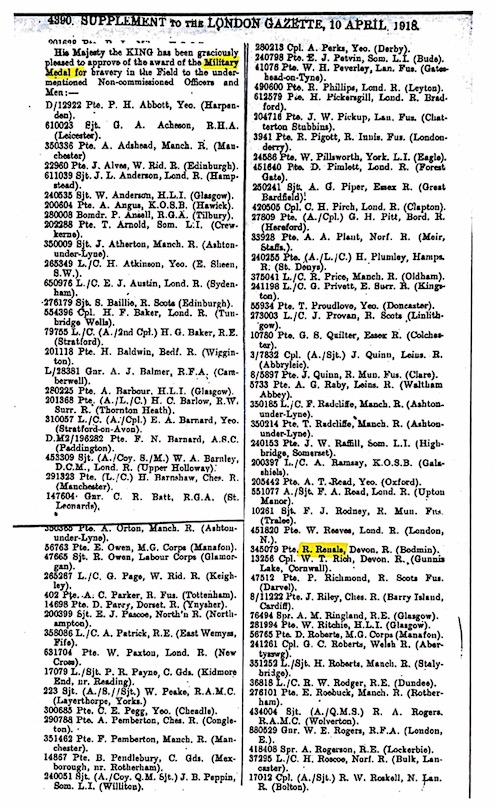
A composite of extracts from the London Gazette dated 10th April 1918 announcing the awards of Military Medals.
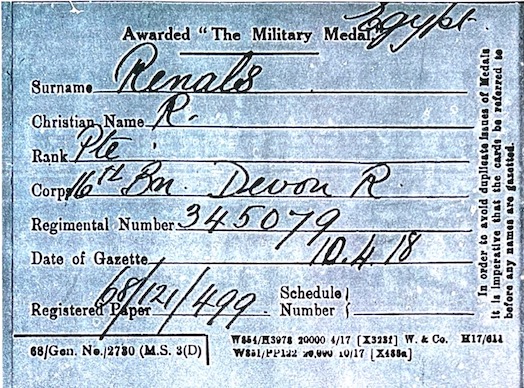
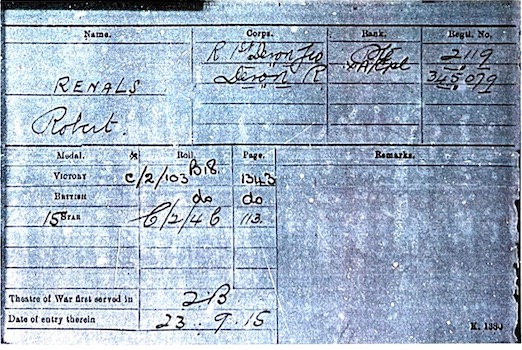
Another Medal Index Card detailing the other medals which Bob was awarded. These were the Victory Medal, the British War Medal and the 1914–15 Star.
The Inter-Allied Victory Medal
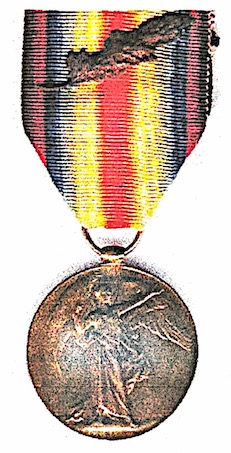
This medal was generally referred to as the Victory Medal or Allied War Medal. It was instituted following an agreement by fourteen Allied powers in March 1919. It was intended to be a single medal across each of the Allies but there were slight variations between different countries. The medal was made from yellow bronze and was 36mm in diameter. The ribbon was officially described as "two rainbows with red in the centre." The obverse of the medal depicted the winged figure of Victory with her left arm extended while her right held a palm branch. On the reverse is the inscription "The Great War For Civilisation 1914–1918" surrounded by a wreath.
The medal was awarded to all those who had served in the armed forces. In Britain the Victory Medal was always awarded in concert with another medal, usually the 1914 Star or the 1914–15 Star. The oak-leaf emblem, shown in the picture above, indicated that the recipient had been "Mentioned in Despatches."
The British War Medal
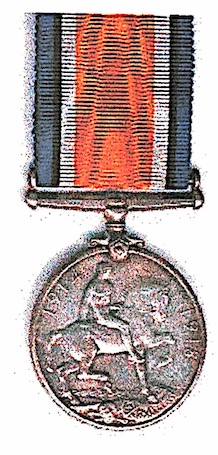
The British War Medal 1914–1920, authorised in 1919, was awarded to eligible service personnel and civilians alike and celebrated the final victory. Qualification for the award varied slightly according to service. The basic requirement for army personnel and civilians was that they either entered a theatre of war, or rendered approved service overseas between the 5th August 1914 and 11th November 1918. Service in Russia in 1919 and 1920 also qualified for the award.
The silver medal shows a male on horseback crushing a shield displaying the German coat of arms. The destruction on the battlefield that so horrified all those involved is symbolised by the human skull and crossed bones under the horse's rear feet. The head of King George V is depicted on the other side.
The 1914–15 Star
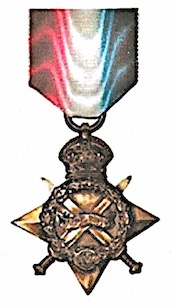
The 1914–1915 Star (not to be confused with the 1914 Star) was a medal awarded by British authorities to those who had given service in the fight against the Central Powers between the outbreak of war in August 1914 and the end of 1915, either on land or at sea. Those who had already received the 1914 Star were not eligible for the 1914–15 Star.
The medal was a bronze four-pointed star with the uppermost point replaced by a crown. The obverse featured a scroll with the dates 1914–1915 spread across (without the Aug and Nov featured on the 1914 Star) surrounded by a laurel wreath. The Royal Cipher GV was written across the bottom. The reverse of the medal was inscribed with the recipient's number, name and rank, unlike the other medals where these details were inscribed on the edge.
The medal was always awarded in conjunction with the British War Medal and the Victory Medal. These three were often referred to, somewhat disparagingly, as Pip, Squeak and Wilfred — three well known (at that time) characters in a popular Daily Mirror cartoon.
The Battle for El Foka
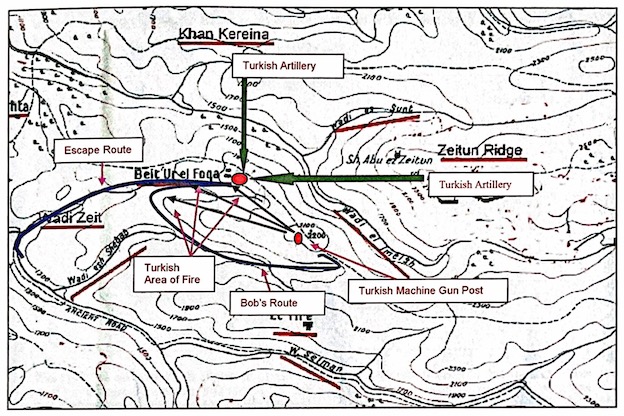
The battle for El Foka during December 1917 ranks among the finest moments in the history of the Devon Yeomanry. Although "the affair" was, as described by company commander Capt. S.R.E. Snow, a shambles, the conduct and bravery of the Devons were recognised and acknowledged throughout the Expeditionary Force from the 20th Corps Commander to the men of other battalions at the front.
The map above has been drawn to illustrate the actions which earned Bob the Military Medal. It also shows the precarious position the Devons were in. They had very little equipment and ammunition available to respond to the shells and machine gun fire coming from the north and east. The machine gun post on the hill five hundred yards south east commanded the supply and escape passage. It was this post that Bob destroyed.
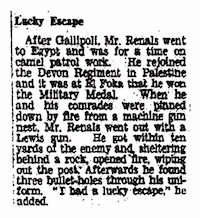
From El Foka he descended as swiftly as possible down the ravine of the Wadi Zeit. The move from the village to the bed of the wadi would have been the most dangerous part of the exploit and it was probably here that Bob narrowly escaped death or injury from the three bullets which tore through his uniform. From the Wadi Zeit he would have turned south east and come into the Wadi esh Shebab. Following this wadi to its source would bring him to the foot of the hill housing the Turkish position, but considerable caution was still required in locating the site. However he was successful and managed to approach within ten yards of the enemy before opening fire and wiping out the post.
Fiftieth Anniversary of Gallipoli
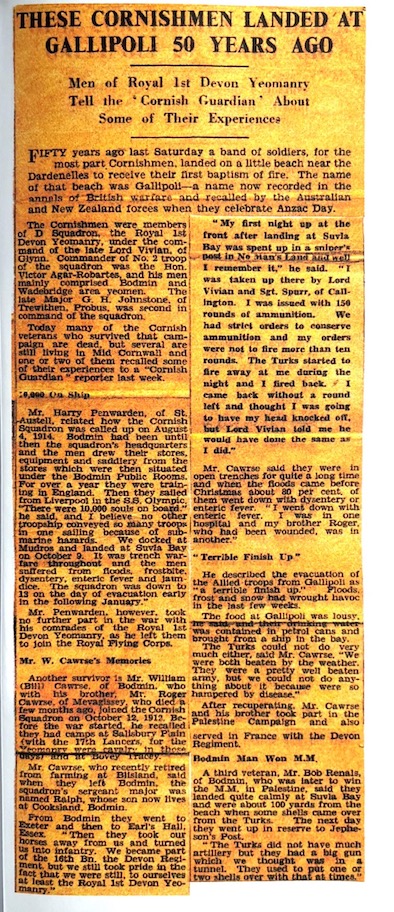
On the fiftieth anniversary of the Gallipoli Landing the Cornish Guardian published an article commemorating the event. Below is an extract from that article referring to Bob's part in the El Foka battle.
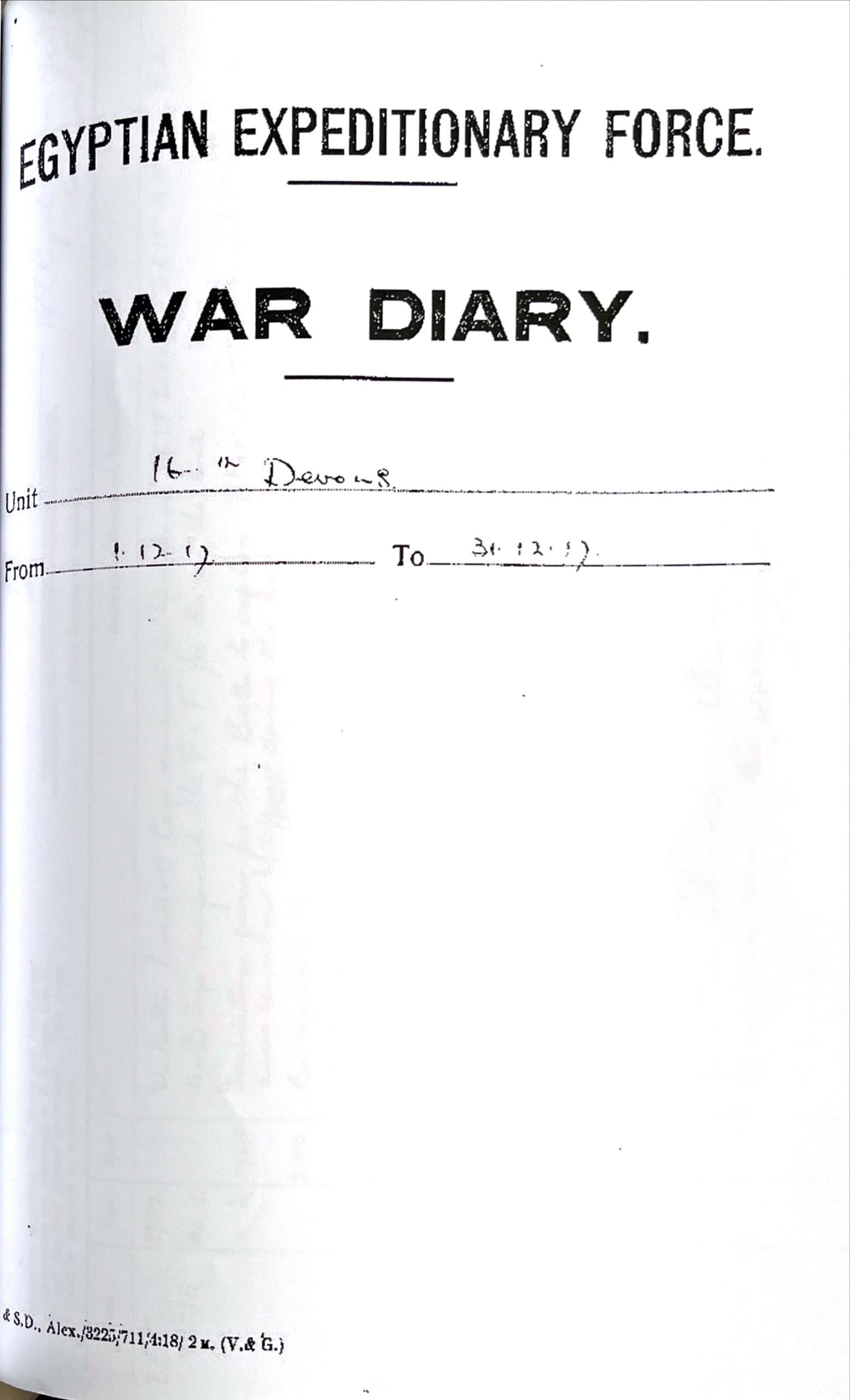
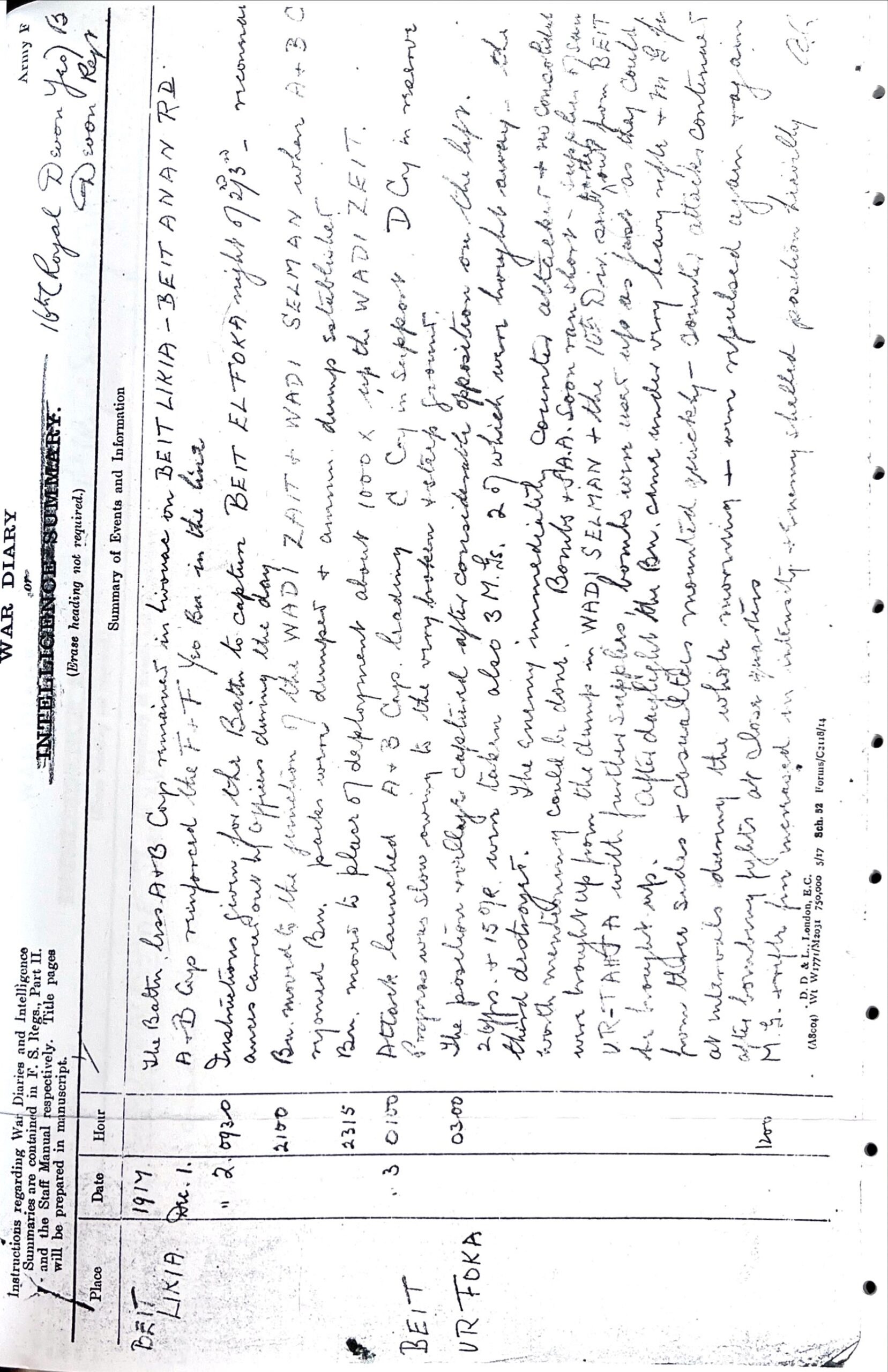
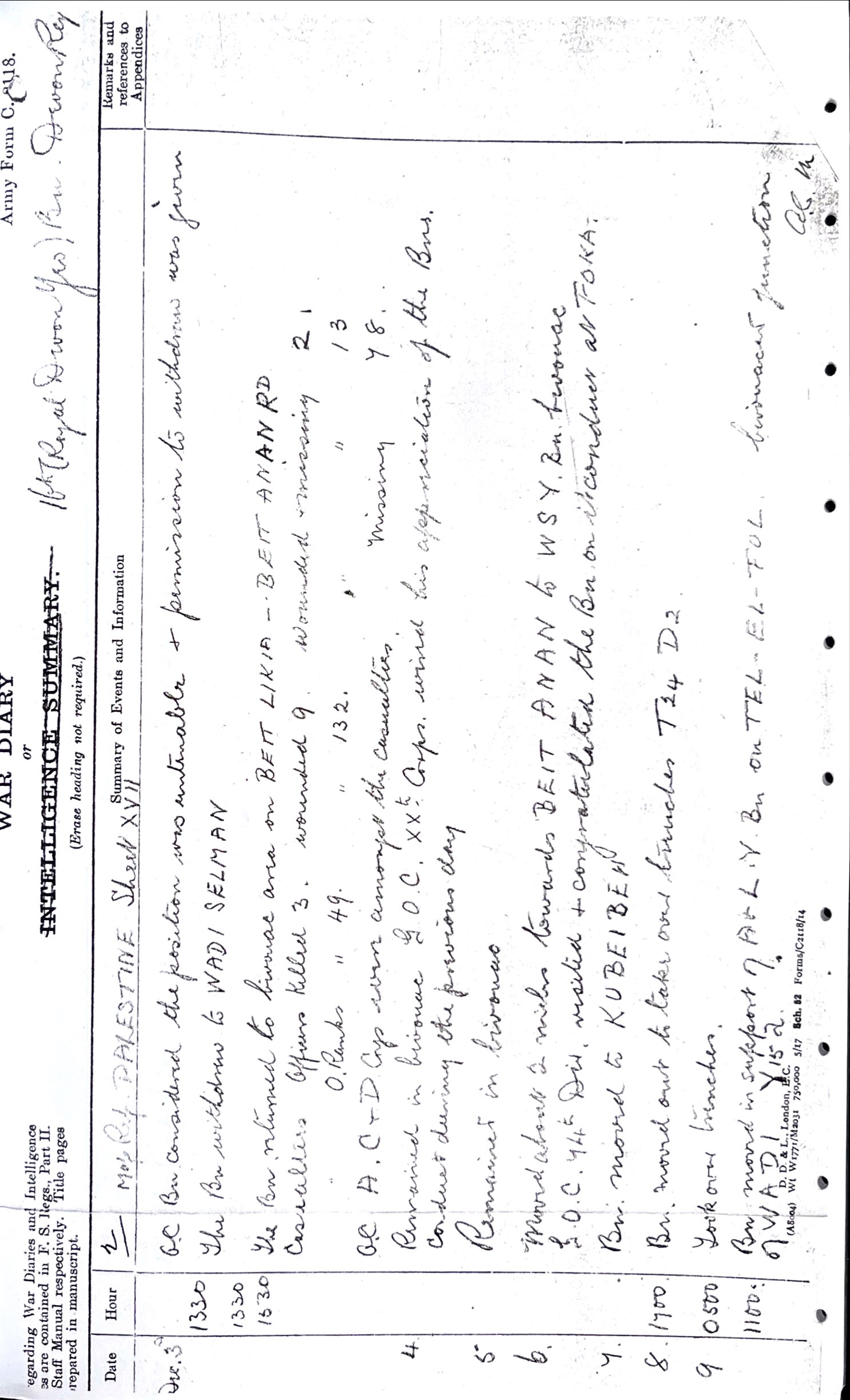
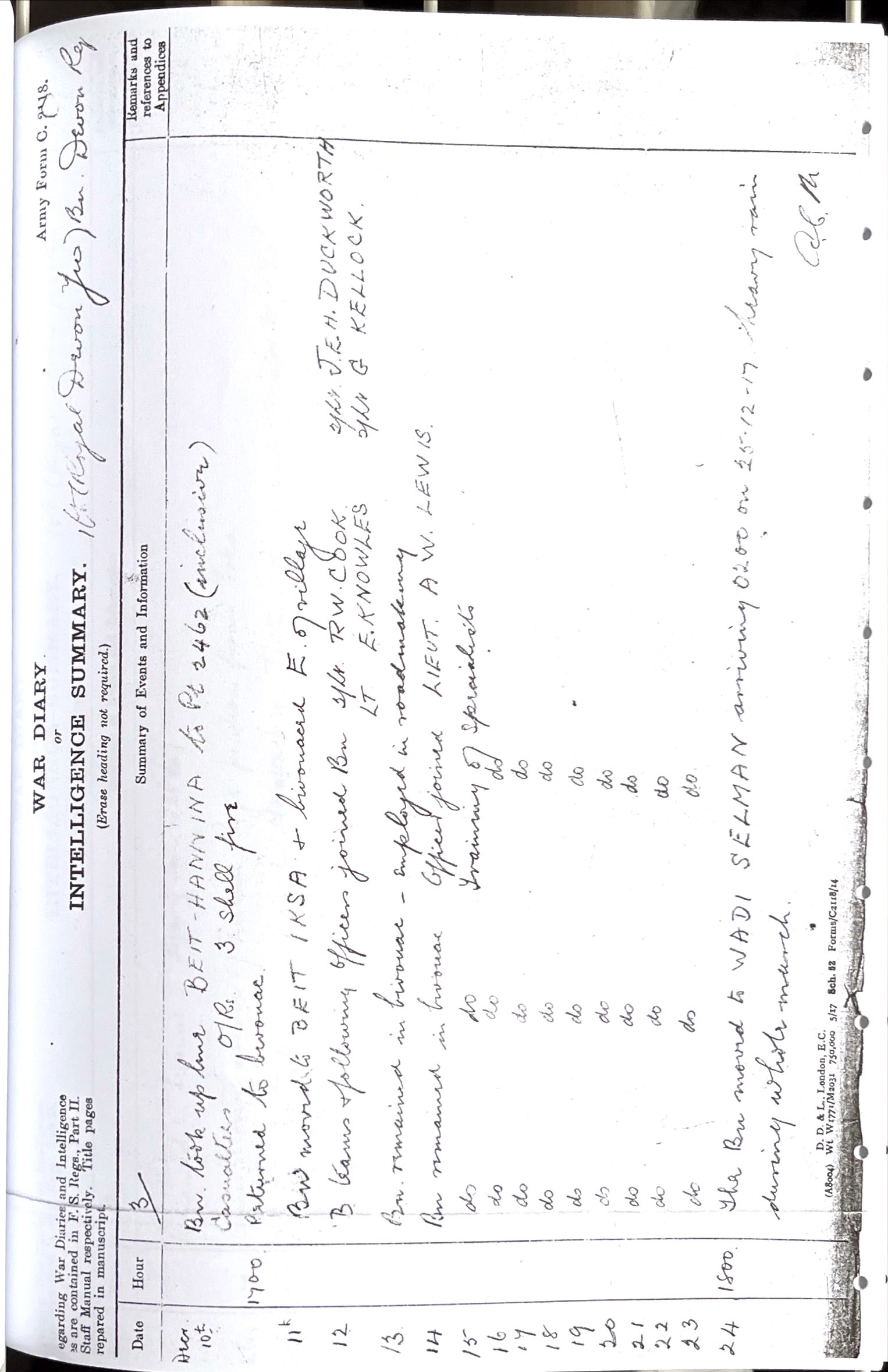
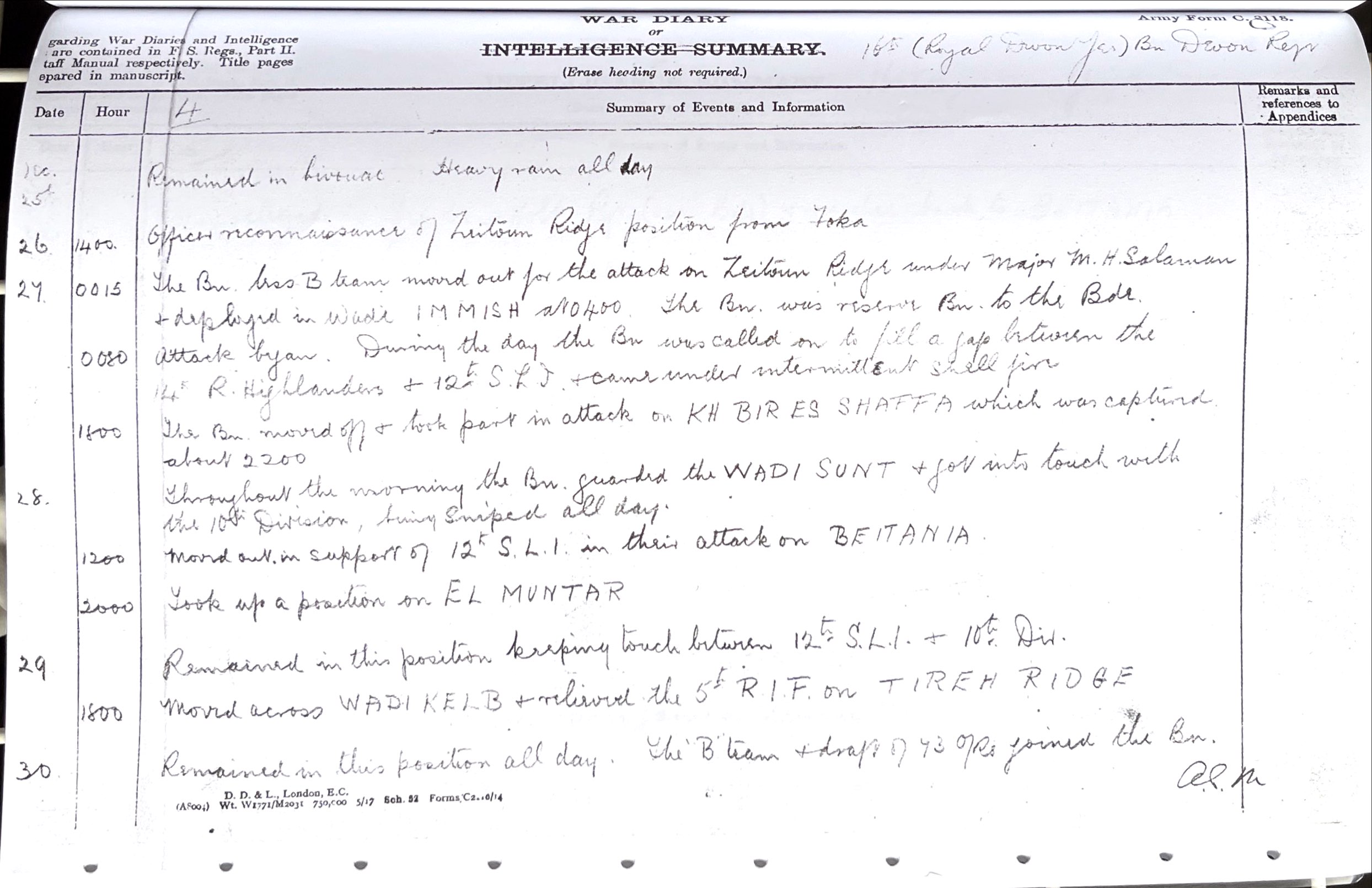
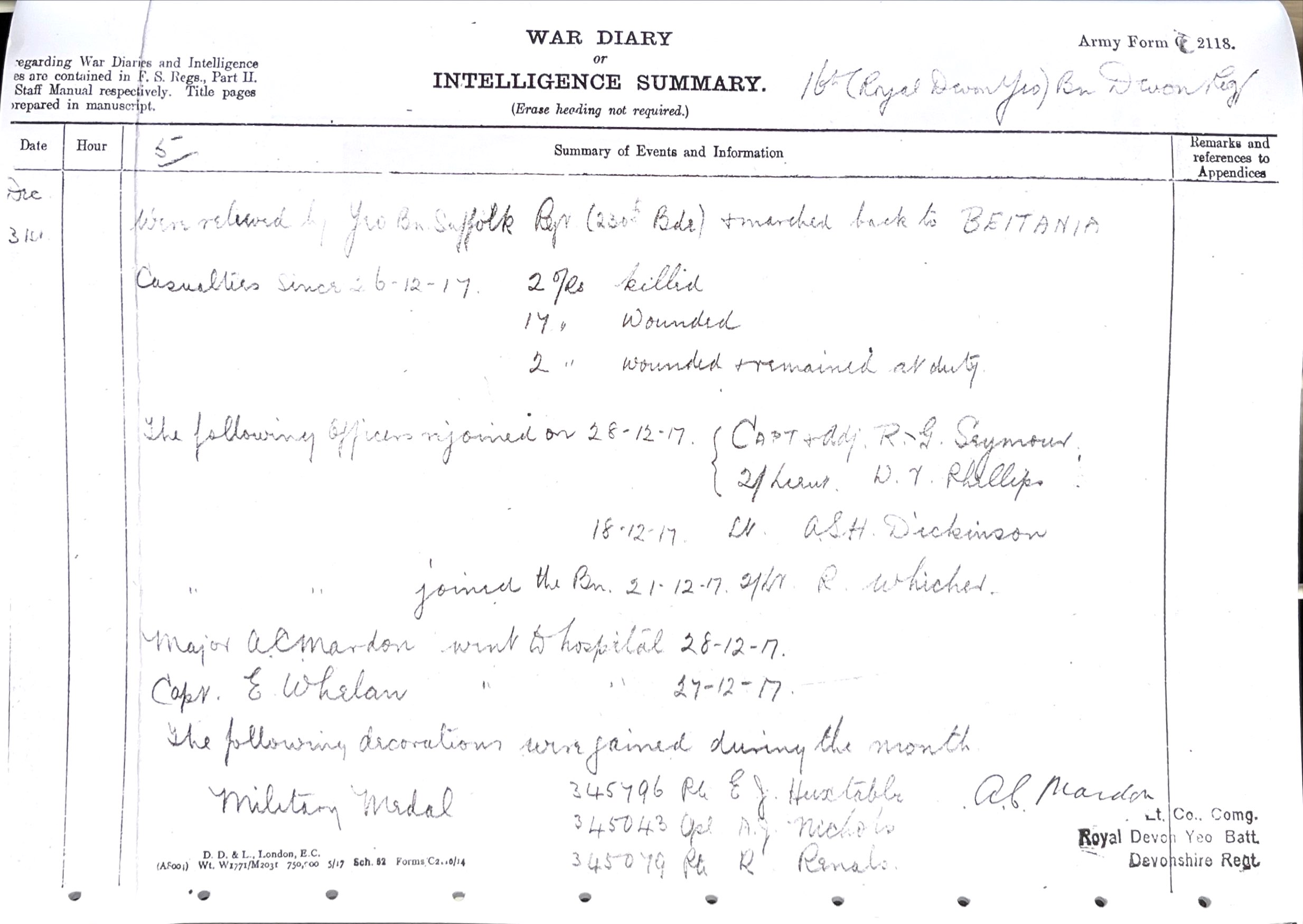
The following pages are copies of pages from the War Diaries relating to this episode. This must have been a miserable time for the Devons, perhaps summed up by the entry for Christmas Day: "Remained in bivouac. Heavy rain all day."
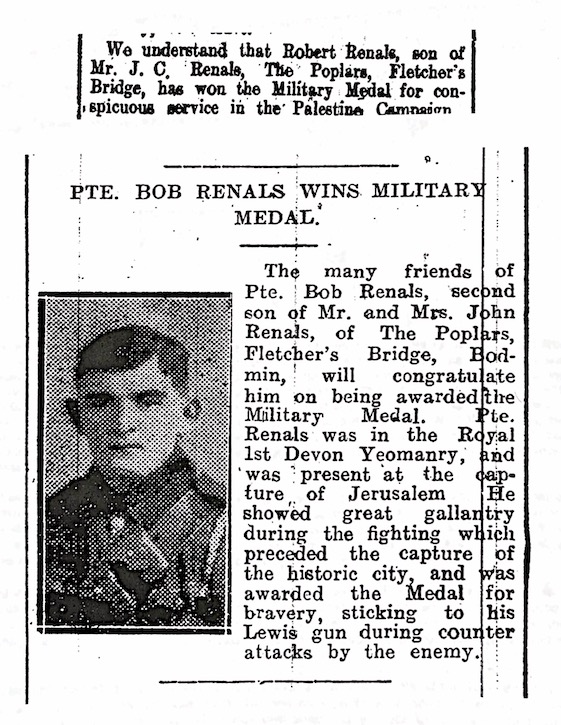
Two articles from the Cornish Guardian reporting Bob's award. The first is from the paper dated Friday 25th January 1918 and the second is dated 22nd February 1918.
The Lewis Gun
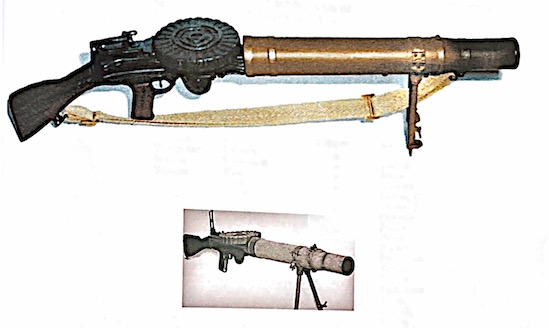
Designed in 1911 by an American soldier, Col. Isaac Newton Lewis, the Lewis gun found little favour in the United States but was quickly accepted in Europe. The Belgian Army first saw its potential and it was manufactured at Liège, but soon after the Birmingham Small Arms Company began making them. In 1915 it was adopted as the standard issue British Army machine gun and by the end of 1916 about 50,000 had been produced. It played an important part in the armoury of the Allied Forces in World War 1 and was also used, but to a much lesser degree, in the Second World War. During the latter war the guns were issued to, among others, the Home Guard and Bob — a member of that organisation — was issued with one and given the job of instructor. The gun was kept in the front room of his home at Bazeleys Bungalow.
The Lewis gun weighed around 12kg and had a circular magazine capable of holding 47 rounds of 0.303 ammunition. The magazine was fixed horizontally on top of the trigger mechanism which, together with its wide tubular cooling shroud around the barrel, made it readily recognisable. The gun's firing rate was adjustable and it was capable of firing between 500 and 600 rounds per minute. With adjustable sights and a bipod support it was effective up to 600 metres.
Being about half the weight of comparable machine guns — such as the Vickers, for example — was an obvious and significant advantage. It was also simpler, relatively cheaper and could be produced at six times the rate of the Vickers. Although normally operated by a two-man crew, one to fire and one to carry the ammunition and reload, it could be carried and used by a single soldier — as Bob did at El Foka.
The Germans named the gun "the Belgian rattlesnake" and after the Battle of the Somme adapted captured Lewis guns for their own use. Some German units preferred to keep the adapted Lewis guns rather than the new guns produced by their own armourers and one of their later guns used important features of the Lewis gun in its design.
The Royal 1st Devon Yeomanry
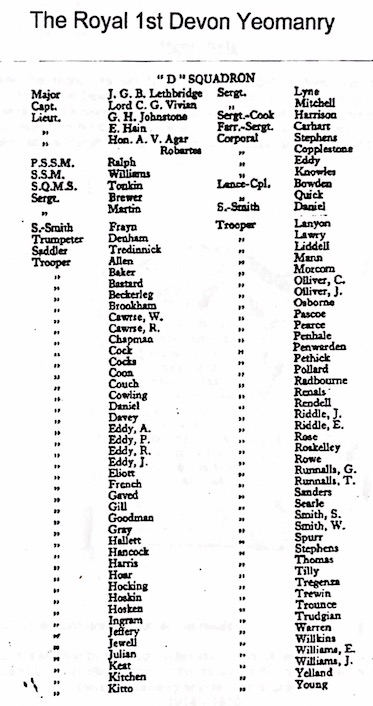
These are the men who were members of "D" Squadron of the Royal 1st Devon Yeomanry at the outbreak of World War 1. "D" Squadron was made up of Cornishmen with the men from the Bodmin and Wadebridge area being in No. 2 Troop under the command of the Hon. Victor Agar-Robartes. Many of these were from farming families well known in the area and their descendants can still be found living and working in Cornwall.
Memorials
After the war the regiments which had amalgamated to form the 16th (Royal Devon Yeomanry) Battalion of the Devonshire Regiment went their separate ways until disbandment. The last time the regiments went on parade was at the services held to dedicate the memorial which had been erected in honour of those who had been killed. The memorial to the Hussars was placed in Barnstaple Parish Church and that of the Yeomanry in Exeter Cathedral.

The memorial to the Yeomanry reads: "This tablet is erected by their comrades in memory of one hundred and twenty four Devon and Cornish officers, non commissioned officers and men, of the Royal 1st Devon Yeomanry who fell in the Great War 1914–1918."
The Cornishmen of "D" Squadron felt there should be a memorial in Cornwall. From their own funds they subscribed to the erection of an ambulance station which was built at the Town Wall, Bodmin. Fixed to the wall of the building was the following plaque.
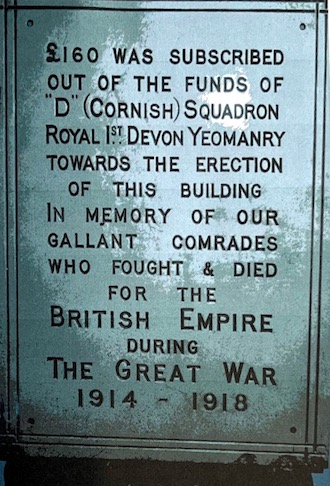
In 1967 the road was widened for the construction of Dennison Road and the ambulance station was demolished. Fortunately the plaque was rescued and kept safe by the Bodmin St. John Ambulance Brigade. After the demolition the Brigade transferred to the old disused Bible Christian Chapel opposite the site of their former station. They remained here until 2007 when they moved to their present station at Normandy Way. It is pleasing to note that through the efforts of the Bodmin branch of the Royal British Legion and Mr. Ivor Whiting, the president of the Bodmin St. John Ambulance Division, the plaque has again been put on display at the Division's new station. As the photos below show there are now two plaques. The second picture is a close-up of the additional plaque which explains the significance of the memorial.
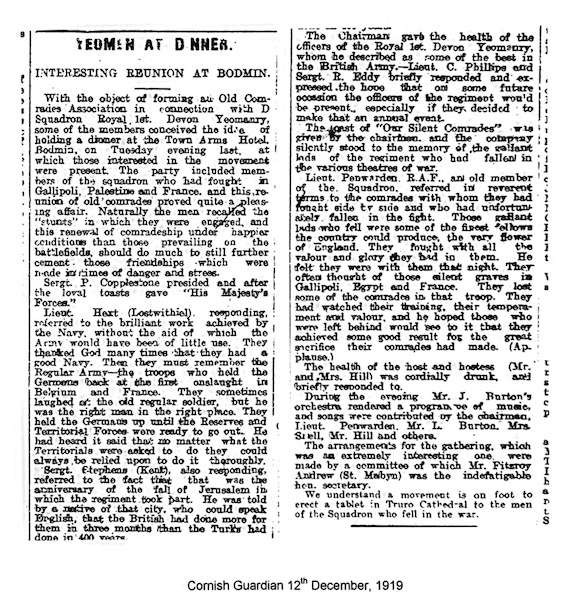
After the 16th Devonshire Regiment was disbanded efforts were made to form a regiment of Cornish Yeomanry but in spite of much enthusiasm the plan did not materialise. However, an Old Comrades Association was formed which continued to meet annually until well into the second half of the last century. In a report of the inaugural meeting in the Cornish Guardian dated December 12th 1919, it was stated that a move was on foot to erect a tablet in Truro Cathedral dedicated to the men of the squadron who fell in the war. Efforts to discover what became of this plan have so far yielded no results. A search of the building has proved fruitless and, unfortunately, the cathedral authorities have not responded to requests for help.
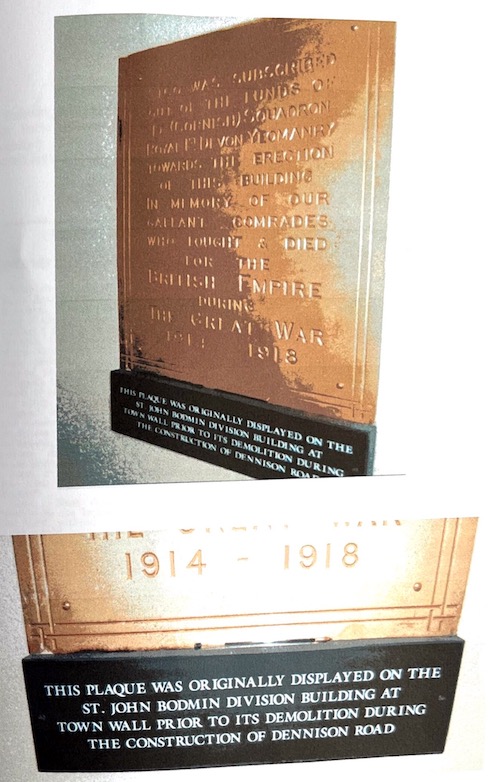
The plaques now on display at the Bodmin St. John Ambulance Station.
Press Cuttings
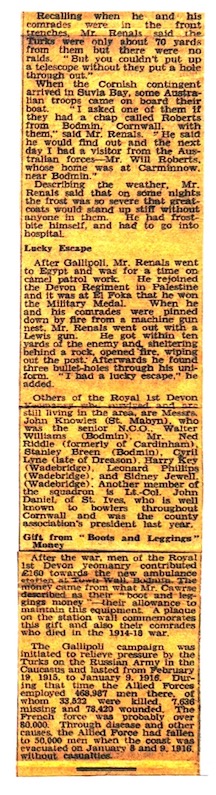
Following are copies of press reports from the Cornish Guardian which add a little more to the story. Some are extracts but others have been reproduced in full. The report below is particularly interesting as it mentions the names of many well known in the Wadebridge and Bodmin area. Their descendants still live in the area.
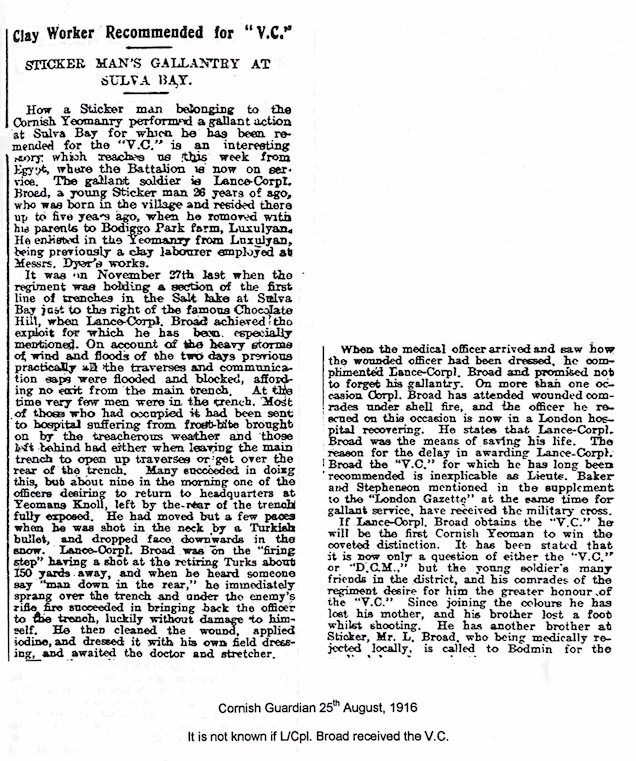
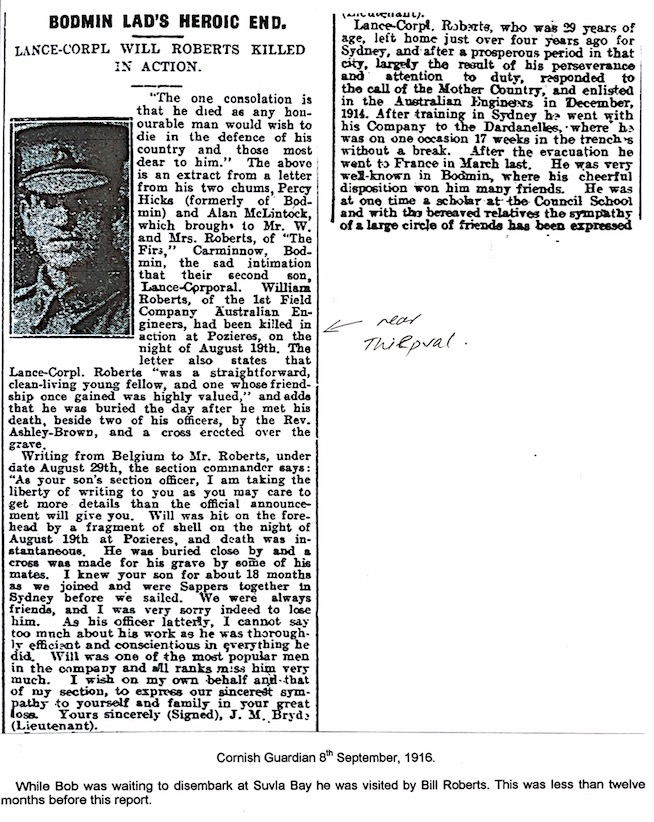
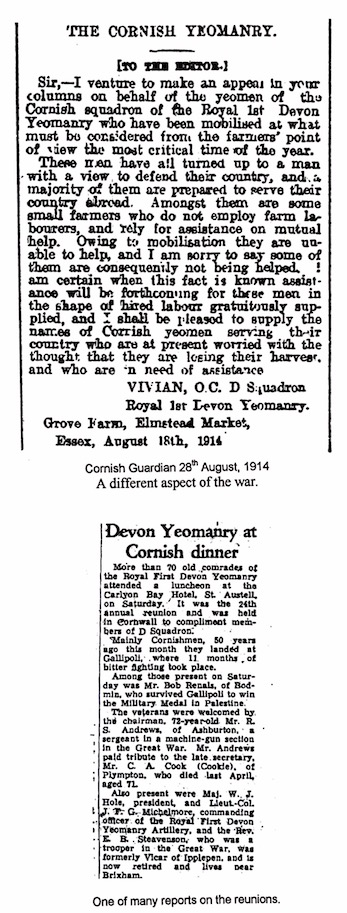
A War Diary
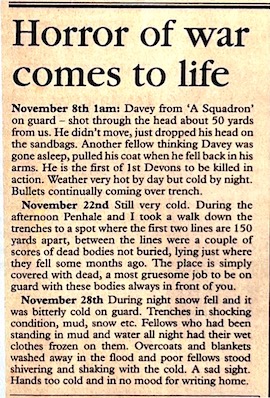
On the 8th May 2000, the Western Morning News published an article about a diary kept by a young Devon Yeoman, Trooper J.R. Tozer. After his death in 1991 the diary remained untouched for years until his daughter rediscovered it. A copy of the diary is now with the Imperial War Museum.
Below is an extract from the article which reproduces three entries concerning his time in Gallipoli. His plain, straightforward style illustrates all too clearly the horror and hardship faced by those in that campaign. It is not clear from the article whether Trooper Tozer kept his diary going throughout the war or just for the Gallipoli episode.
Author's Acknowledgements
Although Bob was never enthusiastic to tell of his involvement in the war he would from time to time allude to some occurrence if within the context of the conversation being held. Most of these revelations concerned the lighter moments of army life and, although fascinating, did little to add to the overall picture of the life of a soldier in the front line or battle zones of World War 1. A further difficulty in trying to put on record his participation in these events was the loss of many of the regiment's records during the bombing in the Second World War. Fortunately a number of books exist which provide good detail of the history of the Devon Yeomanry during the conflict.
In the years immediately after the war the Devonshire Regiment commissioned the military historian C.T. Atkinson to write a history of the 25 battalions of the Regiment which had taken an active part in the war. His book, The Devonshire Regiment 1914–1918, was published in 1926 and has recently been reprinted. The Yeomanry of Devon by Benson Freeman was published in 1927 and is now out of print but available from good second hand book sites such as AbeBooks.com as well as local libraries. The most recently produced book, The Bloody Eleventh, History of the Devonshire Regiment, Vol. 3: 1914–1969, by W.J.P. Aggett, is published by The Devonshire and Dorset Regiment.
The World Wide Web offers a wealth of knowledge on the more general aspects of the hostilities. The photographs on pages 13, 14 and 15 are reproduced by the kind permission of The National War Museum whose excellent website was a valuable source of information.
Another source was the local press. Since its first publication in 1901 copies of the Cornish Guardian have been preserved and recorded on film. These films and the apparatus to view them are available at the Bodmin Library and, no doubt, other libraries and record holding centres throughout the county. From time to time The Western Morning News has published articles relating to the Devon Yeomanry and its involvement in the hostilities. Special mention must be made of Barnstaple Library which was approached in the early stages of the quest as the Royal 1st Devon Yeomanry was formed in this area and had its headquarters at Barnstaple. The staff was most helpful in providing useful material and indicating various lines of enquiry which would be worth following.
Notes to this Digital Edition
23 May 2026
The author of this historical record was my Uncle Edwin J. Renals, who earned much respect in Wadebridge and the wider area as a schoolteacher of significant note. I, Andrew J. Renals, am the son of Roy Frederick Renals, Edwin's younger brother. Sadly, in very recent times, Ed and Roy have both passed. It goes without saying that I believe this document should survive in this digital age. I believe physical copies of the work may be held by the Cornwall Historical Society and perhaps the DCLI Museum at the Bodmin Keep, a part of the old barracks complex that still survives.
Any errors in transferring the printed work to digital are mine alone. I was assisted in the task by Claude Sonnet 4.6.
Andy Renals — May 2026